
Wilkinson faces old challenges with new leaders: 2024 year in review
This was a year of transition, with new faces in familiar places.

2024 in Wilkinson County was a year of transition, with new faces in familiar places.
Aaron Geter retired as Wilkinson County School District superintendent in June. He presided over his final School Board meeting on June 11.
“With this being my last meeting, I just wanted to say thank you to Wilkinson County and all of the staff that has served us so well. I thank everybody for their support over the years,” Geter said, adding he intends to spend more time with his grandchild.
Geter was first hired as principal at Wilkinson County Middle in 1998. He then was selected as superintendent in early 2009, where he served for the next 15 years. Geter also won 10 state championships as head coach of the WCHS basketball team, more than any other coach in Georgia this century.
Angela James was tabbed by the school board as Geter’s replacement. James, a Wilco native, retired from the WCSD in 2020 before taking a job with the Georgia Department of Education. James was the principal at Wilkinson County Middle at the time of her retirement in 2020.
Lagging standardized test scores and relatively high millage rates are not new phenomena in Wilkinson County. During its previous fiscal year, for example, the WCSD’s millage rate was 19.681, the fifth highest out of the 180 “city” and “county” school systems in Georgia. Also, during the previous round of the Georgia Milestones Test, the Wilkinson County School District finished 170th out of 180 Georgia school districts in “content mastery,” which equates to the 6th percentile of Georgia school systems. That same school year, the WCSD ranked 169th out of 180 “city” and “county” school districts at the middle school level, as well as 168th at the elementary school level.
In fifth grade math, for example, 87.9 % of WCSD fifth graders were classified as “beginning learners” or “developing learners,” while 12.1% of local fifth graders were “proficient or above in math,” which equates to roughly 1-in-8 students. Based on these numbers, WCSD fifth graders during the 2022-23 school year were approximately 300% less likely to be “proficient or above” in math in comparison to the Bleckley, Johnson, Jones and Laurens school districts.
Again, these issues are nothing new for the WCSD and have been happening for years. In 2024, however, the WCSD faced an unprecedented level of scrutiny from the public, due largely to several vocal Facebook critics, as well as a series of articles in the Times-Journal-Post that analyzed the lagging standardized test scores. The chief Facebook critic was David Hadarits, a local man and frequent critic of Geter and the school board. Hadarits did more than complain on Facebook, however. He also decided to run for school board, and in November he was elected as Wilkinson County’s next school board chair.
James, despite being on the job for fewer than two months, faced plenty of questions from the public during a packed town hall meeting at the courthouse in late August, a town hall that focused on the larger issue of property taxes.
“Is the school district where we want it to be? No, it’s not. But, we have set a plan in place…We have accountability protocols in place where we are really working to improve outcomes for students in Wilkinson County. That takes more than the folks who are just in the school. It takes a community effort. A school is a reflection of its community, so what we want to do is engage in a positive way with all of our stakeholders in the community,” said James. “(The citizen’s) point is well-taken. No, the schools are not where we want them to be. But, we have a plan in place where we are solidly focused on instruction and recruitment.”
2024 was an especially large voting year in the county. It all began in March when a Board of Commissioners Chair “special election” was held in conjunction with the presidential primary. Republican newcomer Tony Bentley and former seat-holder Michael Gottell emerged as the two top vote-getters and advanced to a runoff, one in which Bentley cruised to victory by roughly 25 percentage points. Bentley was sworn in later in the spring, becoming Wilkinson County’s third different county commission chairman in the last year-and-a-half. The runoff became necessary after the previous chairman, Royce Brewer, passed away in August 2023. Bentley was the only political newcomer in the commission chairman race. Bentley is retired from BASF and also co-owns C&B Meat Market and Processing. He closely aligned himself with Brewer during the campaign.
“Royce was like family to me. We knew each other for a long, long time, and he was always somebody who I greatly respected,” Bentley told the Times Journal Post earlier this year. “I thought about (running for the position in 2022) long and hard, but then Royce told me that he was gonna run, so I decided not to.”
The November general election cemented Wilco as a “reliably red” county. Not only did Donald Trump win the county’s presidential vote by roughly 18 percentage points, local Republicans also cleaned up. In several days, when officeholders are sworn in at the courthouse, every constitutional officer in Wilkinson County will be a Republican except the sheriff. That “exception” is Richard Chatman, who put up big numbers on Tuesday despite running as a Democrat. Chatman, first elected as sheriff in 1996, received 3,347 votes, while Republican challenger Chancey Allen garnered 1,477, a difference of 38 percentage points. 2024 marked the first time in years that anyone even bothered to run against Chatman.
Meanwhile, Republican Amanda Panther bested Jamesha Anderson, the Democrat incumbent, by a vote total of 2,653-2,122 in the Tax Commissioner’s race. Anderson was sworn into office in May 2022 after then-Tax Commissioner Vanessa Lewis resigned and went to work in the private sector. Anderson and Panther have both worked in the Tax Commissioner’s Office for several years. Also, in the Coroner’s race, Republican Dusty Thomas defeated Democrat Aisha Edmonds by a vote total of 2,844-1,938. Billy Matthews, Wilco’s longtime Coroner, previously decided not to seek re-election, opening the door for a new crop of coroner candidates. In terms of the other constitutional officers, current Superior Court Clerk Kimberly Bentley ran unopposed, as did Amanda Holder in the Probate Court Judge’s race. Both women are Republicans. Bentley, who’s worked in the Clerk of Superior Court’s office for several years, has led the office since the retirement of Cinda Bright in early 2023. Bright had been on the job for roughly four decades, and Bentley was her protege. Holder, meanwhile, soon will be sworn in to replace Lisa Dykes, who decided not to seek re-election earlier this year.
The local red wave did not stop there, however. The Wilkinson County School Board soon will include three Republicans. Until 2016, no candidate in Wilkinson County even bothered to run for local office as a Republican. Now the school board will include a Republican chairman, as well as two GOP school board members. That chairman will be the aforementioned Hadarits, who defeated longtime school board Chairman Roger Smith by a vote total of 2,677-2,105, which equates to 56% to 44%. Also, Republican Johanna Rogers easily won a spot on the school board in District 3, downing incumbent Leroy Strange 63% to 37%.
Circling back to the presidential race, Trump performed stronger than ever in Wilkinson County, reflective of Wilco’s party shift to the right. Trump received 51.05% of the local vote in 2016, 55.9% in 2020 and then 58.4% on Tuesday.
“Early voting” proved more popular than ever in 2024. A total of 2,460 residents of Wilco took advantage of early voting, a number that was larger than the 2,192 votes cast on election day. Statewide, meanwhile, more than 3.7 million early votes were recorded, shattering the previous record by more than 1.4 million votes. Early voting in Georgia was expanded in 2008, although it took a few election cycles for more voters to get into the habit. For example, there were 1,667 early votes recorded in Wilkinson County in the 2012 general election and 1,536 in 2016, respectively. Early voting surged during the COVID-19 pandemic in 2020. This was the first time that early votes outpaced election-day votes in Wilco and the rest of Georgia. That trend continued in 2024, as early voting has become the new norm. Like most small counties in Georgia, all early voting in Wilkinson County is conducted at the courthouse, while more populated counties have multiple locations. Bibb County, for example, has three early voting locations, while Fulton County has 40-something.
The bigger picture
Wilkinson County’s population isn’t getting any larger, and it’s also not getting any younger. In 1997, for example, there were 2,864 children (17 and under) living in the county, according to Census data. Fast forward to 2022, and that number was 1,899. In other words, the number of children living in Wilkinson County decreased by one-third in 25 years. Where did all of the kids go? Much of it can be explained by birth rates. Women simply aren’t having as many children nowadays. Between 1997 and 2002, for example, there was an average of 151 Wilkinson County babies born per year. Compare that to 2017-2022, when the five-year average was 95, according to state data.
There’s also the fact that Wilkinson County’s total population is declining. The Census Bureau placed Wilco’s population at 8,877 in 2020, which compares to 10,220 back in 2000. That represents a loss of 13.1%.
Another pressing issue in Wilkinson County, which rarely receives attention, is the increasing number of babies born to unwed mothers. While children of single mothers have grown up to become doctors, lawyers, CEOs and even United States presidents, children born to unmarried mothers statistically have a lower chance of success. It’s one of the long-term challenges facing Wilkinson County, which ranked 22nd out of 159 Georgia counties in 2022 in “births to unmarried mothers.” The Georgia Department of Health compiled the database, and it’s all based on birth certificates (county of residence of the mother, race of the child, etc.). Out of the 63 Wilkinson County babies born in 2022, roughly two-thirds were “births to unmarried mothers,” according to the database. Taking a closer look, that breaks down to 0% of “Hispanic” newborns (four babies total), 49.1% of “White” newborns and 90% of “Black or African American” newborns. The Department of Public Health’s database goes back to 1994. During the first five years of available data (1994-1998), a total of 49% of Wilkinson County babies were “births to unmarried mothers.” In the five most recent years (2018-2022), that percentage was 60.8%. The bulk of the increase over the years can be attributed to “white unmarried mothers.”
Switching over to the economy and job market, kaolin is still the undisputed king in Wilkinson County. Roughly one-quarter of all jobs in Wilco are related to “mining and quarrying,” according to the Georgia Department of Labor’s data. According to the Department of Labor, the average for a “mining” job in Wilkinson County was $1,361 per week in 2019 and $1,454 in 2023, an increase of 7%.
This is part of the problem, however. Wage growth hasn’t kept up with inflation and the cost of living thus creating more strain than usual for more families. Housing and the cost of housing are at the forefront. Singlewide mobile homes are now routinely renting for more than $1,000 per month. Much of it is anecdotal, and there’s no exact data for how much rent has increased in Wilkinson County in the last five years.
These are only estimates. The website rentdata.org, which organizes data from the Department of Housing and Urban Development, most recently placed the “fair market value” of a “three-bedroom home” in Wilkinson at $1,138 per month. Compare that to 2019, when the dollar amount was $864. Using the HUD data, at least, rent in Wilkinson County has increased by 31.7% in the last five years. As a comparison, rent in the Atlanta Metropolitan Statistical Area has increased at an even more staggering rate. A “three-bedroom home” in the Atlanta MSA most recently was placed at $2,410 per month, according to the HUD data, which compares to $1,427 back in 2019. This equates to an increase of 69% in metro Atlanta.
Gordon goings-on
Gordon City Hall faced its fair share of challenges in 2024.
At different points during the year, there was mold growing in the public library and in the visitors center, leading to the shutdown of both. City Hall and Gordon Main Street had to scramble in the weeks leading up to the Fall Line Festival. None of the electrical outlets at MLK Park were working at the time and “wires were showing.” Also, the grass at the park was overgrown for much of the summer. There are the bathrooms, which have seen much better days.
At one point, Gordon’s city park had exercise and playground equipment, but nowadays, the swingset isn’t even operational anymore.
“Horrible” is how Mayor Aprill Adside-Smith described the state of the city park during a called meeting of the City Council in February.
Then, there are the larger and much more expensive issues. Gordon’s water and sewerage infrastructure is growing old in a hurry. It’s not just a Gordon program. For decades, city councils all over Georgia have preferred to kick the can down the road. After all, funding water and sewerage projects is expensive and complicated.
In February, a consultant gave council members a general overview and project estimates. The treatment plant on Papermill Road needs more than $4 million worth of upgrades just to maintain the status quo, according to Greg Boike with the Middle Georgia Regional Commission. Meanwhile, if Gordon wants to make the city more attractive to prospective factories and larger businesses, that amount is closer to $5.5 million. Then, there are the water/sewerage upgrades needed around downtown. The cost of improvements in the downtown area, which would include a new elevated storage tank, would cost an additional $3 million, roughly.
Meanwhile, the Gordon Fire Department “failed the minimum requirements to be recognized” by Verisk Analytics, the company tasked with assessing fire departments and assigning an Insurance Services Office (ISO) fire safety rating for communities across the country. This subsequently makes Gordon’s ISO rating a Class 10, meaning that the city’s fire services failed to meet the minimum level of requirements to be recognized.
The Class 10 ISO rating boils down to the number of firefighters — or lack thereof. Gordon currently has zero volunteer firefighters.
Multiple meetings grew contentious. At a meeting in early August, Councilman Rodney Evans initiated a conversation about travel expense reimbursements, and the temperature suddenly rose. Evans asked City Clerk Towana Brown about the process of documenting travel receipts and how he thinks that some council members receive more scrutiny than others. Four members of the City Council recently attended the Georgia Municipal Association’s Annual Convention in Savannah. Included was one receipt from a council member that totaled nearly $100 at Ruth’s Chris Steakhouse. Councilwoman Barbara Towles, typically quiet and reserved at the meetings, raised her voice and told the city clerk that the travel reimbursement scrutiny made her “feel some type of way,” basically suggesting that the two white council members are not questioned as much about their travel expenses in comparison to the four Black council members.
“I’m tired of this harassment,” Brown said. “I’m tired of being harassed when I’m trying to do my job.”
Mayor Smith then temporarily regained order. The tone eventually became negative again.
Longtime Councilman Harold Whipple eventually managed to turn the temperature back down, and cooler heads eventually prevailed.
“We all have to work together,” Brown said. “Let’s just start fresh…so this won’t happen again.”
The mayor agreed, indicating that “expense procedures” need to be more organized and documented in the future.
That previous month, City Attorney Jim Green was fired by a 4-2 vote along racial lines. The vote followed a lively conversation about whether or not Evans should’ve recused himself from voting on several prior occasions. At issue is a city credit card that Evans applied for in July 2022, one that read “RODNEY EVANS, CITY OF GORDON.” This ultimately led to disputes, confusion and an outside investigation. In March of this year, the City Council voted to pay off roughly $6,000 worth of the credit card debt, tasking Green with the job. Two months later, Green never completed the task, which frustrated Mayor Aprill Adside-Smith and several council members.
In terms of the city credit card quandary, here’s a history lesson. The Gordon City Council back in May 2022 approved a “city credit card,” which could be accessed by two people — Smith and City Clerk Towana Brown. Then, in July, according to documents, the mayor approached the city clerk with a pair of credit cards that read “RODNEY EVANS, CITY OF GORDON.” The clerk then told the mayor that “the council did not approve a credit card in the name of Rodney Evans” and that “it was an unauthorized credit card.” The city clerk then followed up with Morris Bank, where Evans applied for the cards, and it was discovered that Evans used the city’s Tax ID number and other information to open the cards. Also, “there was a letter on file (at the bank) written by Mayor Smith saying it was okay for Council Member Evans to have the credit card account.” Evans later was instructed to cancel the cards, according to the documents, which he never did.
Adside-Smith then began using the credit card to purchase numerous items for the 2022 Christmas parade, which she was authorized to do. The City Council originally approved $2,000 to be allocated for Christmas 2022. Adside-Smith then went out and raised an additional $2,500, bringing the total “Christmas budget” to $4,500. The mayor, who was authorized to coordinate the purchases, began spending in early November, ordering 5,000 lights from a company out of Gainesville for $1,491, while also buying roughly $1,100 worth of Christmas items from Lowe’s and spending several hundred more dollars at a pair of local hardware stores. After several more purchases, the original $4,500 “Christmas budget” pretty much was spent. Smith paid for each purchase with a city check.
What happened after that, however, is where the unanswered questions lie. Smith then used a credit card to purchase more Christmas items from Walmart, Hobby Lobby, Party City and other big-box stores in the area. Around that same time, though, she also used the credit card to register for a Georgia Municipal Association event in Atlanta for $760. Smith, according to the credit card statement, didn’t stop using the credit card once Christmas ended. On Jan, 4, she charged a Delta Air Lines flight to Washington, D.C. for $441.80 and another $740 for registration to an event in Washington, D.C. On Jan. 23, meanwhile, there was another $1,470 to “Hilton Hotels of Atlanta,” which was for travel to the Georgia Municipal Association event she attended, alongside council members Harold Whipple and Rodney Evans. The mayor later canceled the Delta flight and the D.C. trip.
The City Council ultimately voted to hire Atlanta-area law firm Fincher Denmark to get to the bottom of the matter. Winston Denmark eventually turned over its final report to the City Council, while also turning in an invoice for $14,689.14. Hired at $185 per hour, that comes out to roughly 79-and-a-half hours of work, which caught several City Council members off guard. In its final report, Winston Denmark wrote that although several city credit card “expenditures incurred by Mayor Smith violated certain requirements” of the city of Gordon’s credit card policy, the mayor’s “expenditures did not cause adverse harm or injury to the City of Gordon.” Fincher Denmark’s report concluded, in short, that Smith spent more money on Christmas decorations and the 2022 Christmas parade than was budgeted. However, the “mayor repeatedly volunteered to pay” back the additional money and “as such, Council can allow Mayor Smith to pay that portion of the credit card expenditures.”
Author

Related Articles

With new event space, bakery, Downtown Gordon begins to thrive
Recently, Paper Mill Market relocated to Irwinton, thus making way for The Millings, a new event space in downtown Gordon.
More than 100 EV charging stations slated to be built around Middle Georgia
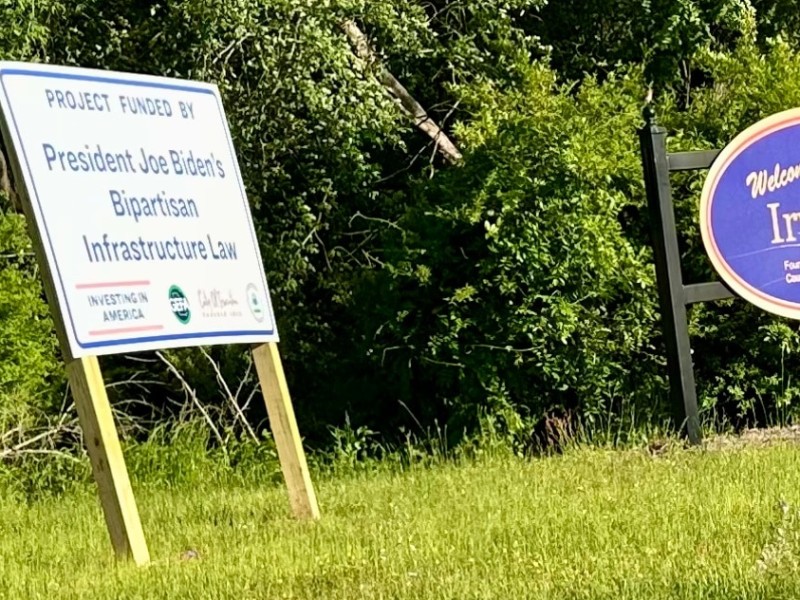
A large and somewhat cryptic sign first appeared at the corner of Ga. 57 and US 441 in Irwinton earlier this spring.

Wilco High School alumna opens new lemon-themed bakery in Gordon
The bakery is slated to open May 17, although Whipple held a “soft opening” April 27.